
Embark on a journey through the realm of HR Solutions for Workforce Optimization, where innovation meets efficiency to drive organizational success.
Explore the latest trends and strategies that redefine how businesses manage their workforce with precision and effectiveness.
HR Solutions Overview
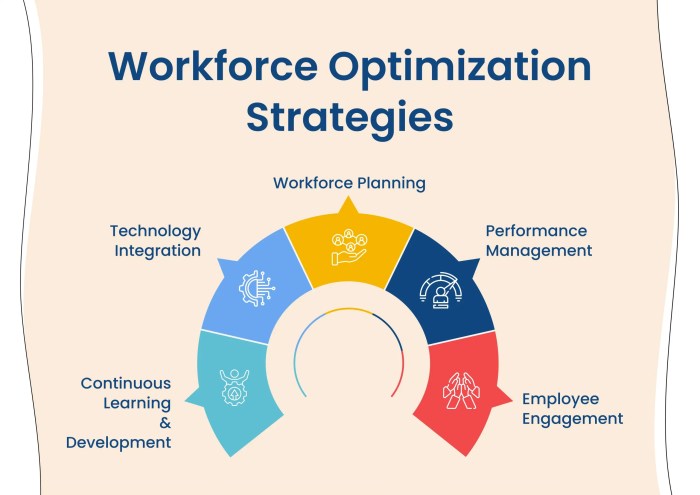
HR solutions for workforce optimization refer to the various tools, technologies, and strategies used by organizations to streamline HR processes, improve employee engagement, and enhance overall workforce efficiency.
Examples of HR Solutions
- Human Resource Information System (HRIS)
-a software solution for managing employee data, payroll, benefits, and performance evaluations. - Recruitment and Applicant Tracking Systems – tools for sourcing, screening, and hiring new talent.
- Performance Management Software – platforms for setting goals, tracking progress, and providing feedback to employees.
Contribution to Workforce Efficiency
HR solutions play a crucial role in optimizing workforce performance by automating routine tasks, facilitating communication, and providing data-driven insights for decision-making.
Importance of Implementing HR Solutions
- Enhanced Productivity: By streamlining HR processes, employees can focus on strategic tasks and core job responsibilities.
- Improved Employee Experience: HR solutions can boost engagement, satisfaction, and retention rates among staff.
- Strategic Decision-Making: Data analytics provided by HR solutions enable organizations to make informed decisions about talent management and resource allocation.
Technology in HR Solutions
Technology plays a crucial role in modern HR solutions for optimizing workforce performance. By integrating advanced tools and systems, HR professionals can streamline processes, enhance decision-making, and improve overall efficiency in managing their workforce.
Role of AI and Automation
AI and automation have revolutionized HR practices by enabling tasks such as recruitment, onboarding, performance evaluation, and training to be automated. These technologies can analyze large volumes of data to identify trends, predict outcomes, and provide valuable insights for HR professionals to make informed decisions.
- AI-powered recruitment tools can screen resumes, conduct initial interviews, and match candidates to job requirements, saving time and improving the quality of hires.
- Automated onboarding processes can help new employees get up to speed quickly, reducing time-to-productivity and improving retention rates.
- AI-driven performance evaluation tools can provide real-time feedback, identify areas for improvement, and personalize development plans for employees.
Comparison with Traditional HR Practices
Traditional HR practices often rely on manual processes, paperwork, and face-to-face interactions, which can be time-consuming and prone to errors. In contrast, technology-driven HR solutions leverage digital platforms, data analytics, and automation to streamline workflows, increase accuracy, and enhance employee engagement.
- Traditional methods of recruitment involve manual resume screening and in-person interviews, whereas technology allows for automated candidate assessment and virtual interviews.
- Performance evaluations done manually may be subjective and inconsistent, while AI tools provide objective data-driven insights for fair and accurate assessments.
- Training and development programs traditionally delivered in classroom settings can now be accessed online through e-learning platforms, offering flexibility and scalability.
Examples of Technology Tools
Various technology tools are used in HR solutions for optimizing workforce performance, including:
HRIS (Human Resource Information System) for managing employee data, payroll, benefits, and compliance.
ATS (Applicant Tracking System) for automating recruitment processes and tracking candidate progress.
LMS (Learning Management System) for delivering online training courses, tracking employee progress, and assessing learning outcomes.
Benefits of HR Solutions
HR solutions offer a wide range of benefits for organizations looking to optimize their workforce. These solutions can streamline processes, improve efficiency, and enhance overall employee satisfaction.
Streamlining Recruitment and Onboarding Processes
- Automating job postings and applicant tracking systems to streamline the recruitment process.
- Centralizing onboarding tasks and paperwork to ensure a smooth and efficient onboarding experience for new hires.
- Providing analytics and reports to track recruitment and onboarding metrics for continuous improvement.
Talent Management and Retention
- Implementing performance management tools to identify high-potential employees and create development plans.
- Utilizing succession planning features to ensure a pipeline of talent for key roles within the organization.
- Offering training and development opportunities to enhance employee skills and increase retention rates.
Improving Employee Engagement and Satisfaction
- Enabling communication and feedback channels to foster a culture of transparency and open dialogue.
- Recognizing and rewarding employee achievements through performance management systems.
- Providing self-service tools for employees to access information, request time off, and manage their own development.
Implementation of HR Solutions
Implementing HR solutions in an organization involves several key steps, challenges, and tips for successful deployment and adoption. Companies that effectively implement HR solutions for workforce optimization can serve as great examples for others looking to enhance their HR processes.
Steps Involved in Implementing HR Solutions
- Assessing current HR processes and identifying areas for improvement.
- Researching and selecting the right HR solution that aligns with the organization’s goals.
- Customizing the chosen HR solution to fit the specific needs and requirements of the organization.
- Training HR staff and employees on how to use the new HR solution effectively.
- Testing the HR solution before full implementation to ensure smooth functionality.
- Rolling out the HR solution gradually across different departments or teams within the organization.
- Monitoring and evaluating the HR solution’s performance and making adjustments as needed.
Challenges Faced During Implementation of HR Solutions
- Resistance to change from employees or management.
- Data migration issues when transitioning to a new HR solution.
- Lack of proper training and support for employees using the new system.
- Integration challenges with existing systems or processes.
- Budget constraints and resource limitations for implementation.
Tips for Successful Deployment and Adoption of HR Solutions
- Communicate the benefits of the new HR solution clearly to all stakeholders.
- Involve employees in the decision-making process and listen to their feedback.
- Provide comprehensive training and support throughout the implementation phase.
- Set clear goals and timelines for the implementation process.
- Regularly communicate progress updates and address any concerns promptly.
Real-Life Examples of Companies Implementing HR Solutions
- Netflix implemented a data-driven HR solution to optimize their talent acquisition process, leading to better hiring decisions and reduced time-to-fill metrics.
- Google introduced an AI-powered HR solution to streamline performance evaluations and feedback processes, resulting in improved employee engagement and productivity.
- IBM revamped their HR systems with a cloud-based solution to centralize HR data and enhance workforce planning capabilities, leading to better resource allocation and talent management.
In conclusion, HR Solutions for Workforce Optimization offer a transformative approach to enhancing employee performance and organizational outcomes, paving the way for sustainable growth and success in the modern business landscape.
FAQs
How can HR solutions benefit small businesses?
HR solutions can provide cost-effective ways to streamline HR processes, enhance employee engagement, and improve overall operational efficiency, making them ideal for small businesses looking to optimize their workforce.
What role does data analytics play in HR solutions for workforce optimization?
Data analytics in HR solutions enable businesses to make informed decisions based on real-time insights, leading to more effective recruitment, talent management, and performance evaluation strategies.
Are HR solutions customizable to fit the unique needs of different industries?
Yes, many HR solutions offer customization options to adapt to the specific requirements of various industries, ensuring tailored solutions that align with the distinct workforce dynamics and challenges each sector faces.


